
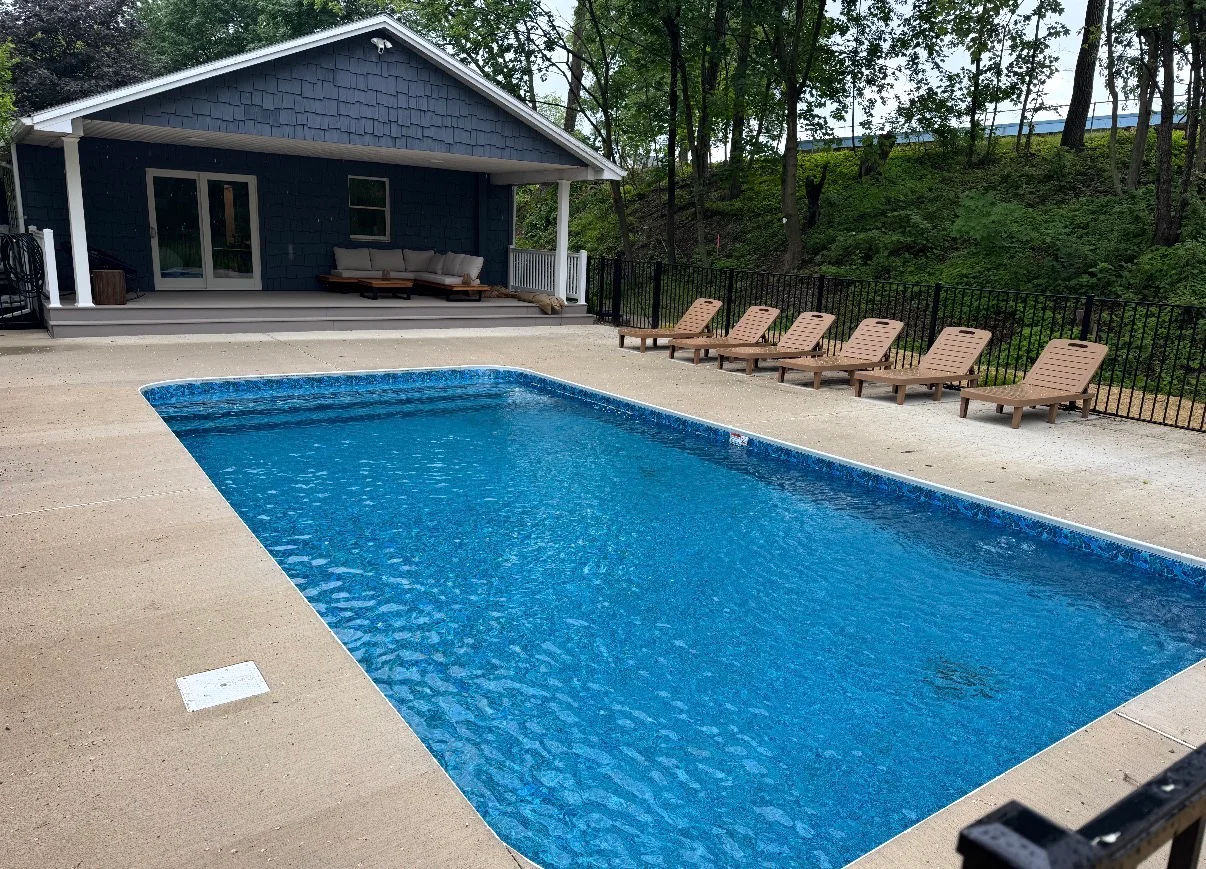
Quick answer
There is no dependable flat price for the outdoor work around a pool. The total depends on where JM Outdoor Services enters the project and whether the scope includes access, excavation, grading, concrete or hardscape surfaces, drainage, equipment-area support, landscape repair, hauling, and cleanup. Separate the pool installer’s quote from the surrounding-yard scope, then make sure the two plans meet without gaps or duplicated work.
Cumberland County Pool Projects
Three parts of the yard that can move the estimate
Gate width, fencing, side-yard space, slope, driveways, patios, beds, and trees can affect how equipment and materials reach the pool area.
The pool, house, lawn, walkways, equipment area, and finished surface need compatible heights so water and foot traffic have a workable path.
Disturbed lawn, planting beds, hardscape edges, excess material, and cleanup should be assigned before work begins instead of treated as surprises at the end.
Start By Separating The Pool Price From The Finished Backyard
A pool quote and a finished-backyard quote do not always cover the same work. The pool installer may focus on the pool system and the work directly required for installation. The rest of your yard can still need access preparation, grade changes, concrete support, walkways, planting beds, lawn repair, drainage corrections, material removal, or cleanup. Ask each contractor to mark where their responsibility begins and ends. That simple step reveals missing work before it becomes an unplanned cost.
The Biggest Pool-Area Cost Drivers Are Outside The Water
The shape and size of the pool matter to the installer, but the surrounding site often determines the scope for JM Outdoor Services. An open, nearly level backyard with direct access is different from a fenced yard where material must pass through a narrow side route. Likewise, a pool that meets an existing patio cleanly is different from one that requires new elevations, surface transitions, retaining work, or repairs across the lawn.
- Equipment access, staging space, and protection for surfaces that stay
- Excavation, material movement, grading, hauling, and disposal
- Concrete support, hardscape edges, walkways, steps, and seating areas
- Drainage paths, downspouts, low areas, and the final surface pitch
- Landscape beds, mulch, lawn repair, cleanup, and connections to the rest of the yard
Build One Scope Before Comparing Numbers
A low number can represent a smaller scope rather than a better price. Put the pool installer’s proposal beside the outdoor-work proposal and look for the handoffs: who opens or restores a fence, who handles excess soil, who establishes the final grade, who builds the surrounding surface, and who repairs disturbed lawn or beds. Also confirm whether delivery, equipment, disposal, cleanup, and protection are included. Estimates become easier to compare when every bidder is pricing the same finished result.
Drainage And Final Elevations Need To Be Decided Early
Pool-area surfaces should not be planned in isolation from the house, lawn, existing patios, downspouts, beds, and natural low areas. The finished elevations affect how water moves and how people walk between the house and pool. Show contractors where runoff travels now and where the yard stays wet after rain. In Cumberland County, approval requirements can vary by municipality and project type, so confirm the applicable permit, setback, fence, and utility steps with the appropriate local authorities before the layout is final.
A Smaller First Phase Can Protect The Essential Work
If the complete wish list is larger than the current budget, reduce or phase the visible finish work before removing necessary preparation. You might prioritize safe access, stable grades, required surfaces, drainage, and cleanup, then plan additional seating, planting, or decorative hardscape later. The key is to choose final elevations and connection points early enough that a later phase does not require tearing out finished work. Phasing should simplify the project, not make access and restoration happen twice.
What A Complete Pool-Area Estimate Should Make Clear
A useful proposal identifies the exact work area, existing features that stay, removal and excavation, proposed grades, surface or edge work, access, drainage responsibilities, material handling, cleanup, restoration, and exclusions. It should also explain which decisions depend on the pool installer’s final layout and how requested changes or unexpected site conditions will be approved. Avoid comparing a detailed installed scope with a verbal allowance or a price that leaves major handoffs undefined.
- The condition in which each contractor receives and leaves the work area
- Final heights where the pool area meets doors, walks, lawn, beds, or patios
- Responsibility for fencing, utility coordination, approvals, and equipment access
- The surfaces, landscape repairs, hauling, cleanup, and exclusions included
Plan The Pool Area With The Rest Of Your Yard
JM Outdoor Services helps with the work around planned, new, or existing pools—not pool installation itself. If your yard is in Cumberland County, Dauphin County, or York County, the team can review access, grading, excavation, concrete support, hardscape edges, landscaping, and cleanup as one connected outdoor scope. Bring the pool plan, the installer’s boundaries, photos of the access route, and the result you want around the water so the estimate can focus on the actual gaps.