
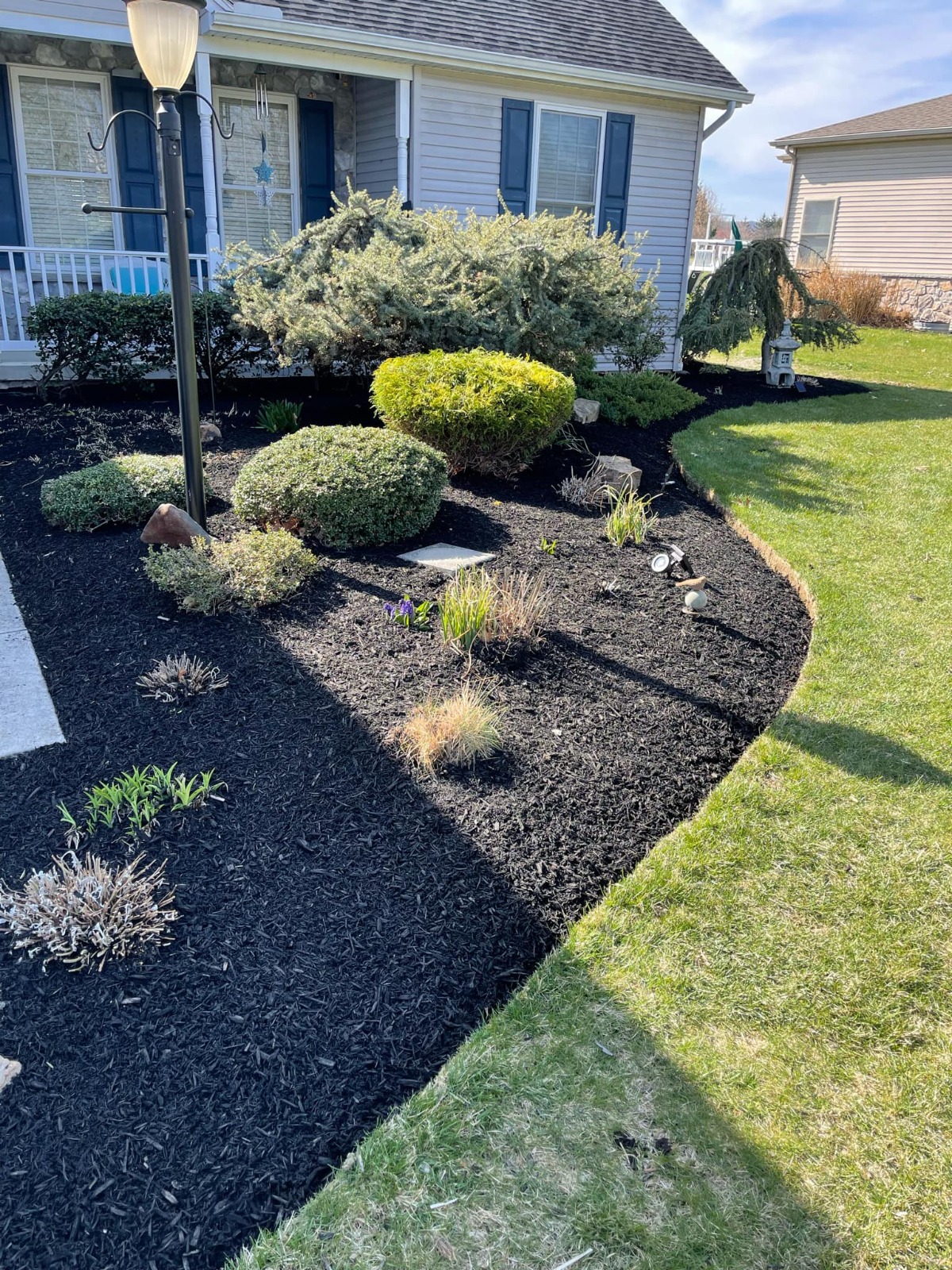
Quick answer
There is no useful single price for landscaping a yard because a bed refresh, seasonal cleanup, lawn repair, drainage correction, and full-yard renovation are different scopes. The most reliable estimate defines the work area, preparation, materials, access, disposal, finish work, and maintenance expectations. Compare the completed result—not just an hourly rate or a price per square foot.
Cumberland County Cost Factors
Three property conditions that can change the scope
Low areas, runoff paths, downspouts, erosion, and soggy ground may require preparation before new lawn, beds, or mulch will perform as intended.
Tight side yards, fences, mature beds, patios, pool equipment, and slopes can affect how crews and materials reach the work area and what needs protection.
Bed edges, mowing routes, plant spacing, mulch coverage, lawn transitions, and seasonal care determine whether a project stays manageable after installation.
Why Landscaping Prices Vary So Widely
“Landscaping” can mean trimming and refreshing existing beds, removing overgrowth, repairing lawn, creating new planting areas, changing grade, or finishing the yard after hardscaping, concrete, excavation, or pool-area work. Those scopes use different amounts of labor, equipment, material, and disposal. Even two areas with the same dimensions can price differently if one is open and level while the other has poor access, established roots, buried debris, drainage trouble, or features that need careful protection. Start by describing the outcome you want and the boundaries of the work instead of asking for a yard-size average.
The Main Cost Drivers In A Landscaping Estimate
A complete estimate reflects more than plants or mulch. Existing material may need to be removed, soil or grade may need attention, and new materials must be delivered and moved into place. Curved bed lines, many small work areas, hand access, mature plants, and detailed finish work can add labor even when the square footage is modest. If landscaping follows another outdoor project, include lawn repair, new edges, cleanup, and the transition to patios, walks, walls, or concrete so those items do not become separate surprises later.
- Removal of weeds, old mulch, damaged plants, turf, roots, stone, or excess soil
- Preparation for grade, drainage, bed shape, soil condition, and new lawn or planting
- Quantity and selection of mulch, soil, seed, sod, plants, stone, edging, or other materials
- Equipment and hand access, delivery distance, hauling, disposal, protection, and cleanup
How Much Does A Small Area Such As 20 By 20 Feet Cost?
A 20-by-20-foot area is 400 square feet, but that measurement is only a starting point. Refreshing an established bed in that area is not comparable to removing lawn, correcting grade, building new beds, adding plants, and repairing the surrounding edges. To make the size useful, note what is there now, what should remain, what must be removed, how water moves through the area, and what finished surface or planting you want. Photos and approximate measurements can begin the conversation, but the site conditions and final scope determine the estimate.
Is An Hourly Landscaping Rate The Best Way To Compare Quotes?
Usually, an hourly number by itself does not tell you which proposal costs less or delivers more. One rate may cover a different crew size, equipment package, or task than another, and it does not show material, delivery, disposal, or the expected number of hours. Ask for the proposed total, what is included, what is excluded, and how changes will be approved. If work is intentionally billed by time and materials, confirm the crew and equipment covered by the rate, estimated duration, material charges, disposal, and how progress will be documented.
- Compare the same work area and finished result
- Separate labor, materials, equipment, delivery, and disposal when the proposal does
- Confirm allowances, optional work, exclusions, and homeowner responsibilities
- Ask how hidden conditions or requested changes affect the price
A Lower-Cost Scope Should Still Solve The Right Problem
The most practical way to reduce cost is often to reduce or phase the scope—not to leave necessary preparation unfinished. Focus first on drainage trouble, unsafe or difficult access, overgrown high-visibility areas, and transitions around existing outdoor features. A first phase might clean up and redefine front beds; a later phase could address a separate backyard area. Reusing healthy plants, simplifying bed shapes, limiting material changes, or choosing a smaller priority area can also help, as long as the plan still supports mowing, water movement, and routine care.
Include Maintenance In The Budget Decision
Installation cost is only part of the decision. New plants may need attentive watering while they establish. Mulched beds need periodic cleanup, edging, and replenishment. Lawn repair requires appropriate follow-up care, and fast-growing or tightly spaced plants can create more trimming later. Ask what care the proposed materials and plants will need, which tasks are immediate, and which will repeat seasonally. A simpler landscape that fits your available time can be a better value than a more elaborate plan that becomes difficult to maintain.
What To Review Before Accepting A Landscaping Estimate
A useful proposal should let you picture the finished yard and understand the work required to get there. Review the areas included, removal and preparation, material types and quantities, plant or seed selections where applicable, grade or drainage work, access, cleanup, lawn and bed transitions, exclusions, and maintenance expectations. For work in Cumberland County, also make sure existing patios, walks, fences, mature beds, and other features that must remain are part of the conversation. JM Outdoor Services can review landscaping as a focused project or connect it with hardscaping, excavation, concrete, or pool-area finish work.