
Quick answer
A trustworthy concrete price starts with the installed scope, not a material-only or square-foot number. The total can include demolition, excavation, stone and compaction, forming, reinforcement specified for the job, concrete placement and finish, joints, drainage details, access, hauling, cleanup, and lawn or bed repair. Ask each contractor to price the same finished result before comparing totals.
Cumberland County Cost Factors
Three conditions that change more than the square footage
A new hard surface changes where rainwater moves. Existing low spots, downspouts, lawn slopes, and nearby beds should be part of the layout and elevation conversation.
Fences, gates, narrow side yards, slopes, established landscaping, and surfaces that need protection can affect equipment choice and material handling.
Concrete rarely ends in isolation. Lawn, beds, gravel, pavers, pool areas, steps, and walkways may need clean transitions or repair after the main work is complete.
Why A Square-Foot Price Is Only A Starting Point
Square footage helps estimate how much surface will be built, but two equal-size projects can require very different work. An open, level area with direct access is not the same scope as a backyard pad that requires removal, hand access, grade correction, or careful work around a pool, fence, wall, or established bed. Small projects can also carry fixed mobilization, delivery, and equipment costs that are spread across fewer square feet. Use an installed square-foot number only after the contractor explains what it includes.
The Work Below The Surface Can Change The Total
Concrete cost is not just the delivered material. The existing surface may need to be broken up and hauled away. Soil may need excavation, and the prepared area may need stone, grading, and compaction before forms are set. The intended use, site conditions, and slab design determine other details that belong in the proposal. If one quote includes complete preparation and another begins at concrete placement, the totals are not comparable.
- Demolition, excavation, hauling, and disposal
- Stone, compaction, forming, and grade preparation
- Slab dimensions, reinforcement details, finish, joints, and edges
- Concrete delivery, placement access, cleanup, and protection
Shape, Finish, And Transitions Affect Labor
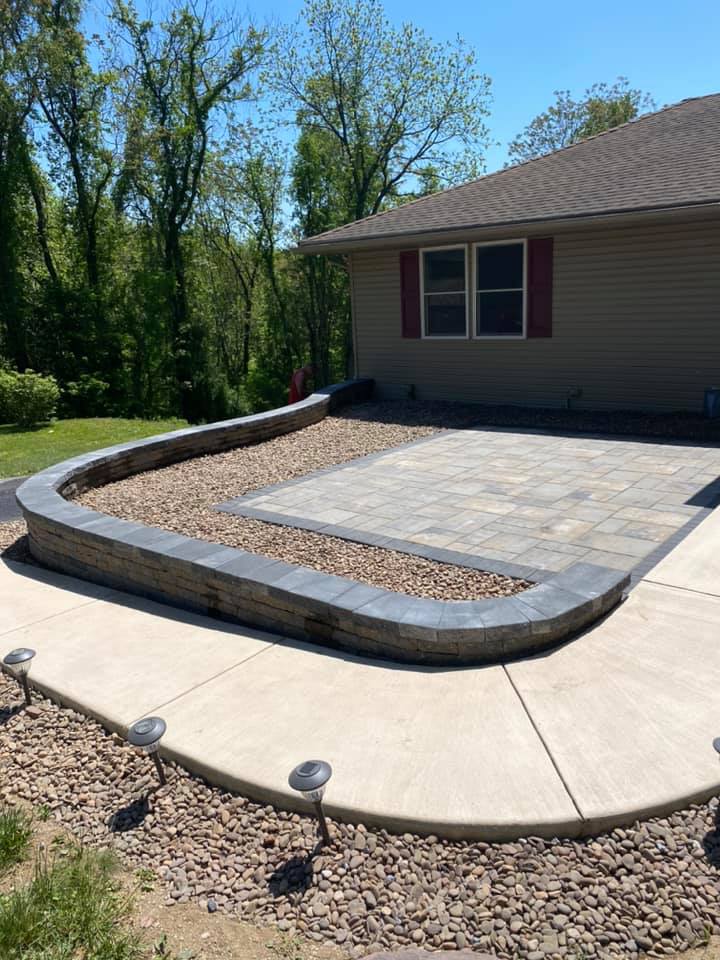
A simple rectangular pad is usually easier to form and finish than a surface with curves, steps, multiple elevations, narrow sections, or several connections. Finish selections and edge details also affect the work. Before accepting a price, confirm how the new concrete will meet doors, gates, driveways, pavers, retaining walls, pool coping, lawn, and planting beds. Those transition points often determine whether the finished project looks intentional or leaves another repair behind.
Drainage Belongs In The Cost Conversation
A new concrete surface sheds water instead of absorbing it, so its elevation and pitch need to work with the surrounding yard. Point out downspouts, low areas, wet ground, washed edges, and runoff routes during the site visit. In Cumberland County, requirements can vary by municipality and project type, so ask which permits or approvals apply before scheduling. A low quote is not a savings if essential grade, drainage, or approval work has simply been left out.
How To Compare Concrete Estimates Fairly
Put proposals side by side and compare the complete scope, not just the final number. Each estimate should make the work area and intended use clear, describe removal and preparation, identify concrete and finish details, and explain cleanup and surrounding repairs. It should also show exclusions, homeowner responsibilities, payment timing, and how an unexpected condition or requested change will be priced and approved.
- Confirm that dimensions, use, preparation, and finish are equivalent
- Ask what is included for access, delivery, equipment, disposal, and cleanup
- Check who handles permits, utility-location steps, protection, and restoration
- Understand exclusions, allowances, scheduling conditions, and change approvals
Can You Lower The Cost Without Cutting Essential Prep?
The safest budget adjustments change the size, shape, finish, or project phase while keeping the preparation required for the chosen surface. A simpler outline, fewer decorative details, or a smaller priority area may reduce labor and material. If several outdoor improvements are planned, coordinating excavation, concrete, hardscaping, and landscape repair can also prevent duplicated access and cleanup. Cutting base preparation, drainage planning, or necessary transitions can move cost out of the estimate without removing the underlying problem.